Restaurant missed calls: AI receptionist or WhatsApp?
For most restaurants, WhatsApp: the guest replies in writing, in their own time, and nothing is misheard. How it compares with voice AI and a receptionist.
Four ways to handle a restaurant’s missed calls
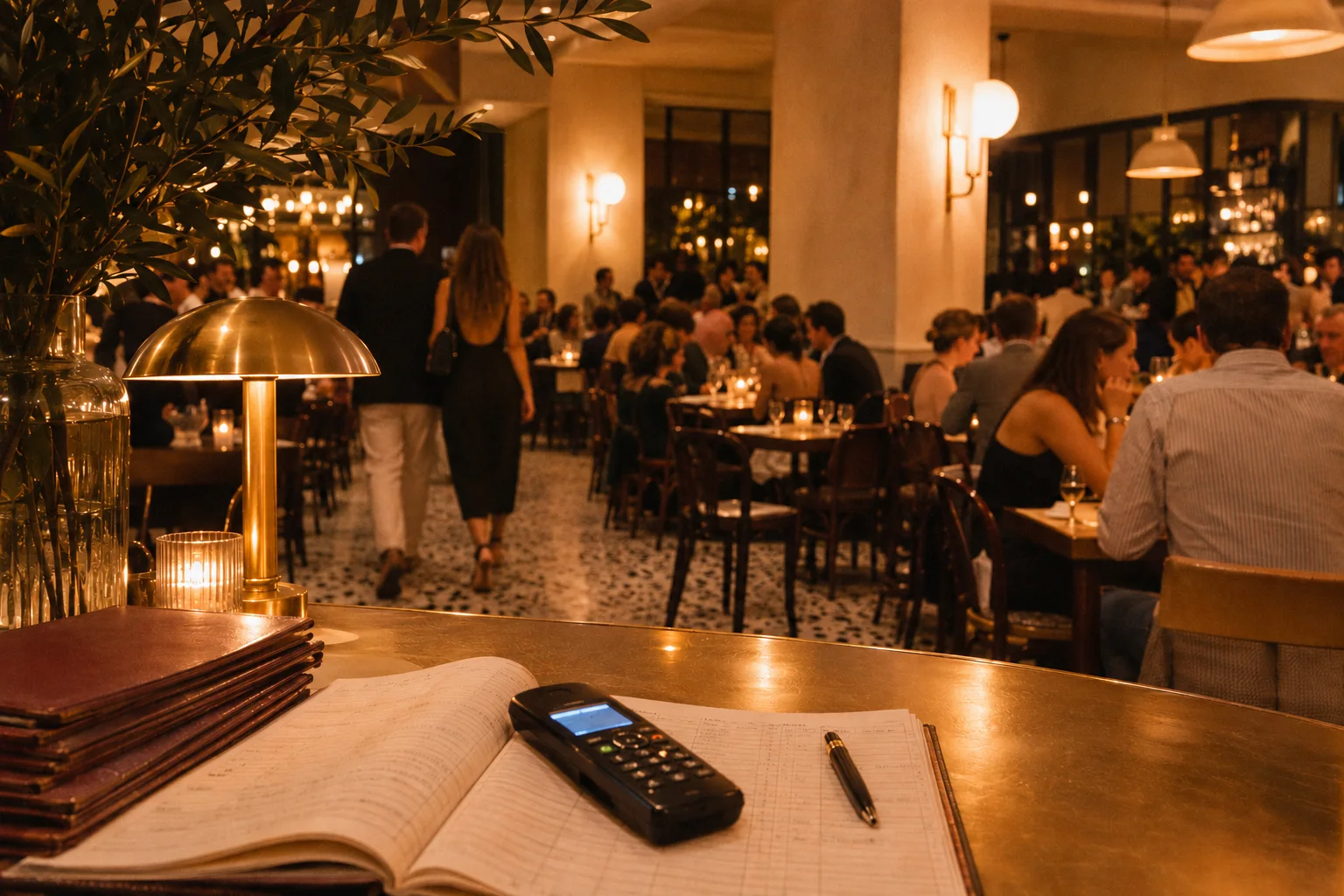
The phone rings in the middle of service. Your maître d’ is seating a table, the kitchen is waiting on a ticket and there’s a queue at the door. Nobody picks up. Often that guest books somewhere else, and the loss never shows up in your accounts.
Here are the four ways to handle the calls you can’t take, what each does well and where it falls short, and how to work out what missed calls cost you.
How much does a restaurant lose to missed calls?
It depends on the venue. Work it out with your own numbers: how many calls you miss in a week, how many of those callers wanted to book, and your average spend. Multiply them and you know what the phone costs you each week.
The phone rings hardest during service, when the room is full and nobody can answer. A guest who gets no answer sometimes rings back later, but often they call the next place on their list.
That loss comes on top of other hidden costs:
- Calls outside opening hours: a guest who rings on a Sunday evening or on your closing day gets no answer and books elsewhere.
- Booking mistakes: a name taken down wrongly or a time scribbled in the book in the middle of service.
There are several ways to deal with it.
The four ways to stop missing calls
There are four ways to catch the calls you can’t take.
1. Voice AI (an AI receptionist on the phone)
A voice agent answers for you, understands the request and confirms the booking over the phone.
Pros: available round the clock, handles busy spells without extra staff, never gets tired.
Cons: a synthetic voice is easy to spot, and plenty of guests switch off as soon as they realise they’re talking to a robot. For a premium venue that’s a real risk: the phone is the first contact, and a robotic voice says the opposite of what the house promises. Add the misunderstandings (accents, background noise, dish names, names that sound alike), the pressure of answering on the spot (the guest has to reply now) and a cost often charged by the minute.
2. Hiring a receptionist (someone dedicated to the phone)
The human answer: someone picks up and takes bookings.
Pros: a warm, human welcome that copes with the tricky requests (groups, allergies, special occasions).
Cons: the cost. A dedicated role, even part-time, is a salary a single venue can rarely justify. And one person can’t cover every hour: they have shifts, holidays and sick days, so late-evening, Sunday and closing-day calls still go unanswered. It solves part of the problem, at a high price.
3. A call centre (outsourced answering)
You hand your calls to an outside provider shared with other businesses.
Pros: long hours and flexible cover, without tying up your team.
Cons: a call centre doesn’t know your menu, your regulars or table 12 that’s always booked on a Friday night. The scripts are generic, the quality varies from one agent to the next and the welcome stays impersonal, which matters when your guests expect to be recognised. You also pay per call or by subscription, and with no link to your booking system there’s retyping and mistakes.
4. WhatsApp: an automatic message after the missed call
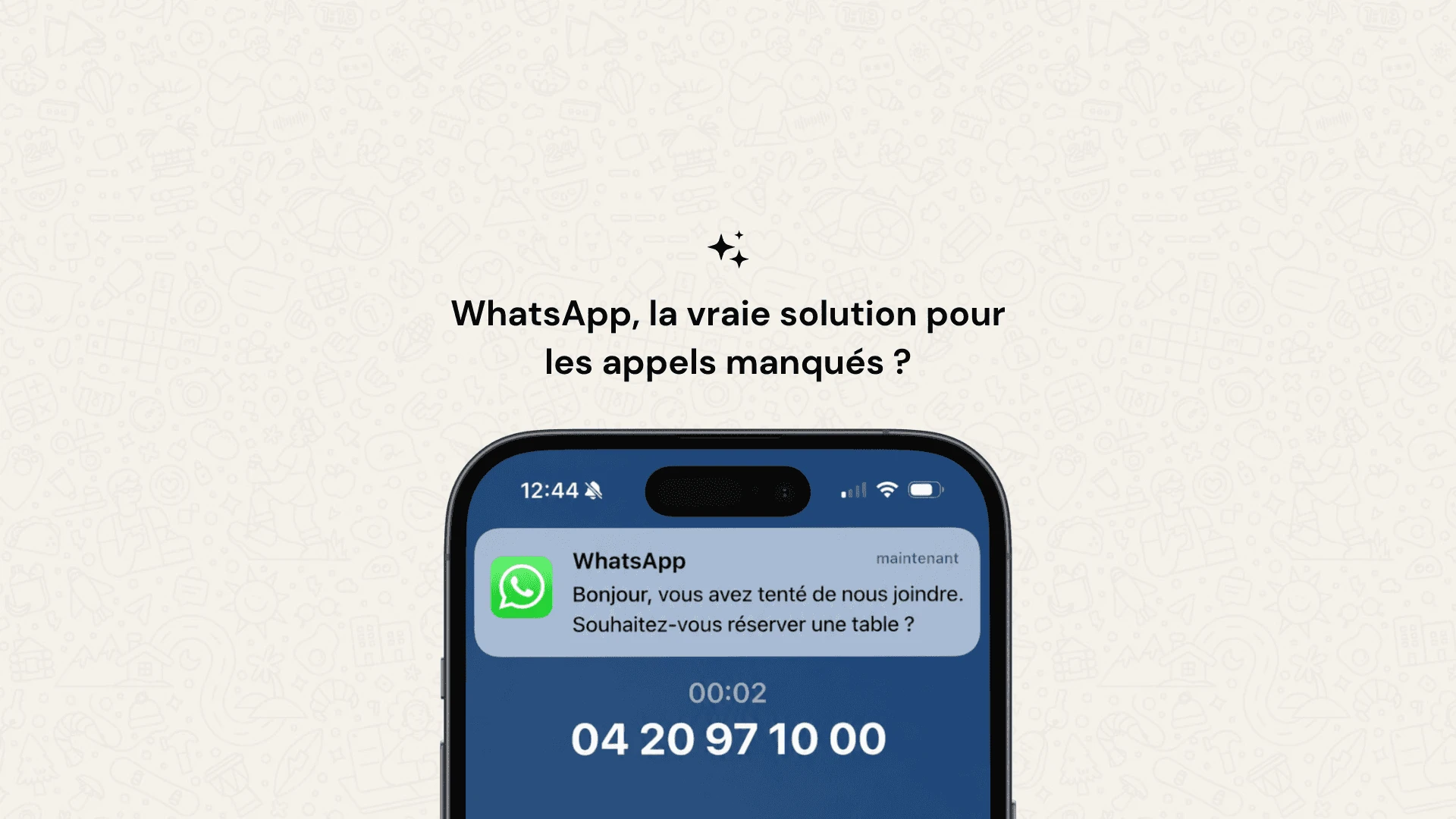
The last approach: as soon as a call goes unanswered, the guest automatically gets a WhatsApp message from your venue offering to finish the booking in writing, in their own time.
It’s the one we chose, and we explain it below.
Why we chose WhatsApp
We built Répondia around WhatsApp because your guests already use it and because you can answer on it at any hour, in writing.
Messages that arrive. 94% of the WhatsApp messages Répondia sends are delivered (Répondia figures as of 18 October 2026). When you message a guest after a missed call, it reaches them.
The app your guests already use. WhatsApp is already on most of your guests’ phones. Your message lands in the same thread as their chats with friends and family, so it feels familiar.
Writing avoids mistakes. Names and times are written down, time-stamped and kept. Nobody has to hear a voice correctly in a noisy room.
The guest replies when it suits them. Unlike a call or a voice AI, WhatsApp lets the guest answer in their own time: on the Tube, between meetings, in the evening.
A welcome that suits a premium house. A well-written message in your venue’s name sends the right signal, unlike a synthetic voice or a call-centre script.
No hiring, a cost you control. Répondia answers at any hour, closing days included, without a receptionist or an outside provider.
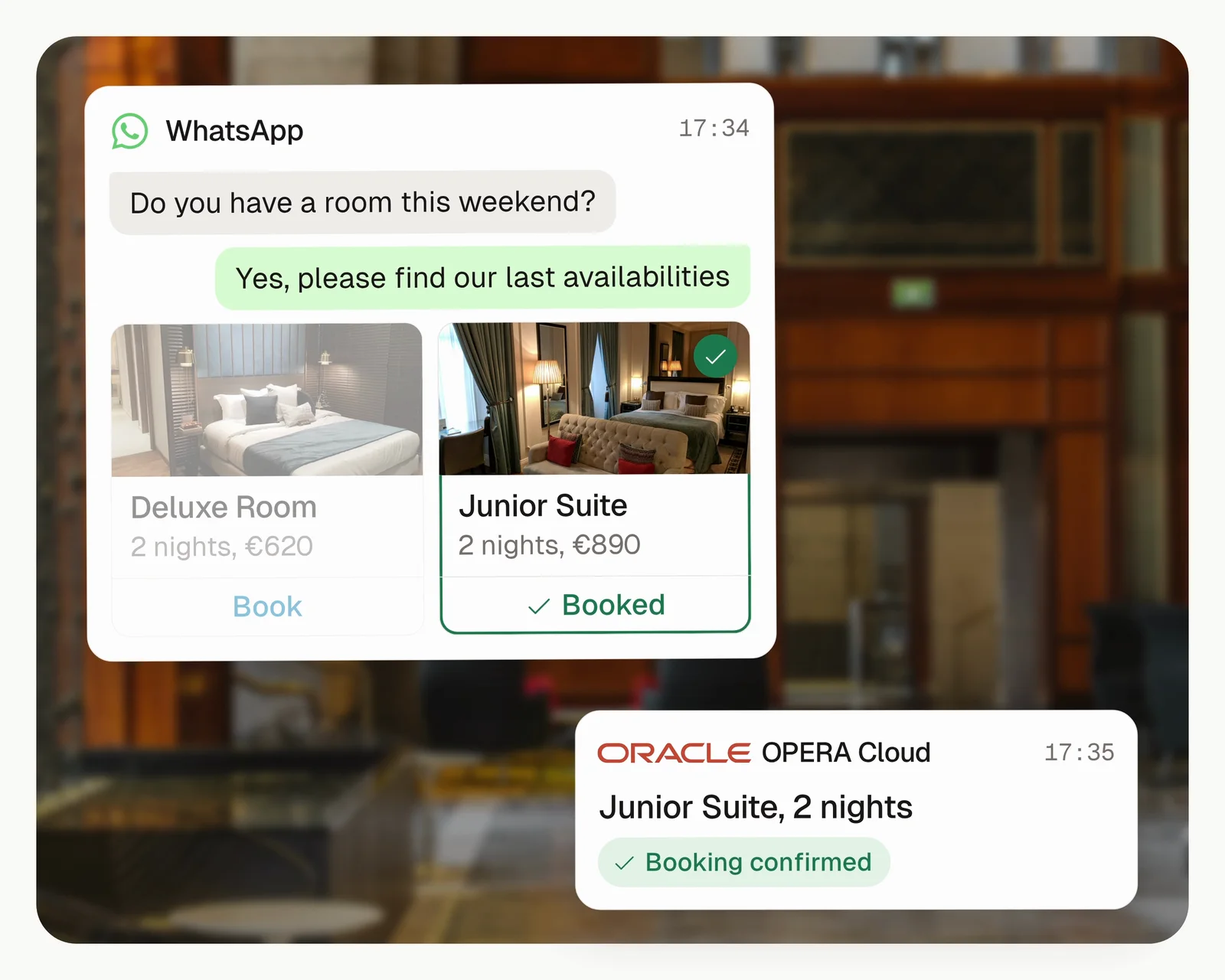
A direct link to your booking system. Répondia enters bookings in SevenRooms, Zenchef, TheFork, Overfull and serVme. OpenTable is coming soon. A booking won back on WhatsApp goes into your table plan with nothing to retype.
To be fair: the limits
No approach is perfect. WhatsApp needs the guest to have the app, which most guests in Europe and the Middle East do, fewer in the United States. The channel also needs the guest’s consent (opt-in), which Répondia respects as a Meta Tech Provider. And for something urgent that needs a spoken answer, the phone still has its place. For a booking, WhatsApp suits most cases.
How Répondia works, in practice
Répondia is an AI agent for restaurants and hotels. After a missed call, it messages the guest on WhatsApp, takes the booking and enters it in the venue’s booking system. It also answers Instagram messages and the venue’s Webchat, and drafts replies to reviews. In practice:
- A guest calls your venue. Nobody picks up (a busy service, a closing day, a late-night call).
- Within seconds, Répondia sends them a WhatsApp message in your venue’s name.
- The guest replies in their own time, in writing, and completes the booking.
- The booking goes into your booking system (SevenRooms, Zenchef, TheFork or Overfull).
Répondia answers in writing, on WhatsApp, the app your guests already use. You win back the bookings that were slipping away, without hiring anyone and without a robot on the phone.
FAQ: missed calls and bookings
How much does a restaurant really lose to missed calls? It depends on the venue: count your missed calls for a week, the share who wanted to book and your average spend. At Kinugawa in Paris, Répondia wins back more than 350 bookings every month.
Does a guest who gets no answer ring back later? Sometimes, but often they call another venue.
Which is better, voice AI or WhatsApp? For most venues, WhatsApp. Voice AI answers at any hour but is easy to spot as a robot; WhatsApp gives a written exchange, with nothing misheard, that does more for the brand.
Do I need to change my booking system to use Répondia? No. Répondia enters bookings in SevenRooms, Zenchef, TheFork, Overfull and serVme. OpenTable is coming soon. You keep the tools you have.
Does it respect guests’ privacy? Yes. Répondia is a Meta Tech Provider and works within the guest consent WhatsApp requires.
Conclusion
Missed calls are one of the few losses you can put a number on, and cut sharply. A receptionist, a call centre and voice AI each solve part of it, at a high cost, with limited hours or a less careful welcome. WhatsApp answers at any hour, in writing, and protects your brand.
Find out how many bookings your venue could win back with Répondia. Book a demo →